













September routines can get crowded fast.
One person handles breakfast. Someone else takes the morning walk. A dog walker covers midday. A partner or family member handles the evening.
Your dog may have several perfectly capable humans looking after them, but there is one small problem:
Everyone might be speaking a different language.
One person says “go potty.” Another says “go pee.” Someone waits by the front door. Someone heads for the balcony.
For a dog, consistency can matter more than which particular word you choose. Training guidance recommends that people caring for the same dog use cues consistently so the dog receives a clear message.
Your Dog Does Not Need Three Instruction Manuals
Dogs learn through patterns.
A cue predicts a behaviour. The behaviour produces a consequence.
When those patterns constantly change depending on who is holding the leash, the routine becomes harder to understand.
This does not mean every caregiver has to behave identically. It means agreeing on the important things.
Pick One Cue and Keep It

Start with your dog's everyday cues.
If “go potty” means toilet time, everyone uses “go potty.”
If “wait” means pause at the apartment door before leaving, keep that consistent too.
Avoid using several phrases for the same behaviour or using one cue to mean several different things. Clear, distinct cues make it easier for your dog to understand what is being asked.
Create a tiny shared vocabulary rather than an enormous training manual.
Keep the Potty Setup Consistent Too
The location matters as much as the words.
If your dog normally toilets outdoors, tell every caregiver which potty area they usually use.
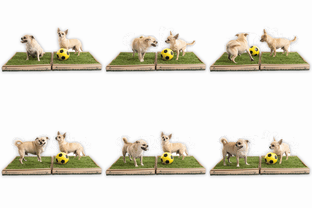
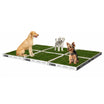
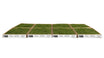
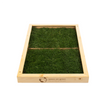
If your dog also uses a home potty option such as POG, keep it in its established location and use the same potty cue there.
POP's POG training guidance recommends maintaining one consistent location and using a repeated cue such as “go potty” or “go grass.”
Moving the toilet area around while simultaneously changing the cue only adds another variable for the dog to figure out.
Agree on What Happens After Success
Consistency should continue after the behaviour.
Does your dog receive a treat immediately after toileting? Praise? A short sniff around outside?
Whatever system has been working, tell the other caregivers.
The reward does not have to come from the same person. It simply needs to communicate the same message:
Yes. That was the right thing.
Try the 60-Second Dog Handover

The easiest system may already be sitting in your pocket.
A quick WhatsApp message can say:
Breakfast ✅ | Pee ✅ | Poop ❌ | Walk 7:00 AM | Next potty break around midday
That prevents the next person from guessing.
For regular walkers or sitters, share the basics once: feeding amount, toilet location, potty cue, walking routine, rewards, medication if applicable, and anything they should avoid.
Written routine instructions are also recommended when someone else is caring for your dog.
Know When It Is More Than Mixed Signals
Do not assume every new accident is a communication problem.
Sudden house-soiling in a previously trained dog can also have medical causes, including pain, mobility problems and urinary conditions.
If accidents appear suddenly or come with straining, discomfort, unusual thirst or other changes, contact your veterinarian.
Consistency Does Not Mean a Perfect Schedule
Your dog does not need breakfast at 7:02 AM forever.
They need the important parts of their routine to remain understandable, even when the person providing them changes.
More caregivers do not have to mean more confusion.
One dog. One system. Everyone on the same page.





Leave a comment
This site is protected by hCaptcha and the hCaptcha Privacy Policy and Terms of Service apply.