How to Use Your Indoor Dog Kennel
The Indoor Dog Kennel works because your dog chooses it. Every stage below is about building that choice, not forcing it. Take the stages at your dog's pace. Some dogs move through the whole thing in two weeks. Some take six. Both are right.
Days 1-3. Open Introduction
Place the Indoor Dog Kennel in the room where your dog already spends most of their time. Gate removed. Nothing blocking the entrance. Put a familiar blanket or your dog's existing bedding inside. Do not guide your dog toward it, call them in, or make a production of it. Let them investigate on their own terms.
Drop a few high-value treats near the entrance each morning. Place one or two just inside the threshold, not at the back, just inside the door. Walk away. Your dog should find them without you watching.
Goal by Day 3: Your dog has approached the kennel voluntarily and entered at least partway on their own.
Days 3-7. Feeding Association
Move your dog's meals to just inside the kennel entrance. Each day, position the bowl a little further back. By Day 7, the bowl is at the back wall and your dog is eating fully inside with the gate removed.
If your dog hesitates to enter for meals, move the bowl back to where they were comfortable and hold that position for another day. Do not rush this stage: feeding association is the foundation of every stage that follows.
Goal by Day 7: Your dog enters the kennel fully and eats at the back without hesitation.
Days 7-14. Time Inside, Gate Off
Once your dog is eating comfortably inside, start encouraging short rest periods in the kennel. Drop a treat inside after meals (when dogs naturally want to rest), say a consistent cue word, something like "kennel" or "bed", and let them settle. Gate stays removed.
Some dogs will start choosing the kennel for naps on their own during this stage. That is the goal. If yours does, do not interfere. Let the habit build without any gate involvement.
Goal by Day 14: Your dog enters voluntarily outside of mealtimes and rests inside for short periods with the gate removed.
Days 14-21. Gate Reintroduction
The gate enters your dog's life only after they are fully comfortable going in and out on their own. Reattach the gate. Close the gate for 30-60 seconds while your dog is resting inside, stay visible and calm. Open it before they show any sign of wanting to leave. Drop a treat through the gate while it is closed. Do this 3-4 times a day, always opening before stress signals appear.
Gradually extend the closed period: 1 minute, then 3, then 5. Your dog should remain relaxed throughout. Yawning, looking around, or settling are relaxed signals. Panting, pawing at the gate, or vocalising mean you have moved too fast: go back to the previous stage.
Goal by Day 21: Your dog tolerates 5-10 minutes with the gate closed without stress.
Days 21-28. Gate Closed, Short Durations
Extend gate-closed sessions to 30 minutes, then an hour. Stay in the room for most of these sessions at first, then begin leaving the room for short periods. Always use your cue word before closing the gate. Never close it on a dog who has not entered voluntarily.
Maximum: 4 hours of gate-closed time during the day. For overnight: leave the gate open or removed until your dog has been reliably choosing the kennel for sleep for at least a week. Many dogs prefer the gate open overnight permanently: this is fine.
Always let your dog out before they show signs of distress. A dog who exits the kennel relaxed and returns to it later is building a positive association. A dog forced to stay in past their threshold is learning the opposite.
Goal by Day 28: Your dog settles in the kennel with the gate closed for up to an hour without stress.
Weeks 4-6. Building Duration and Independence
Extend closed sessions gradually toward the 4-hour daytime maximum. Continue using your cue word consistently. The Indoor Dog Kennel is now your dog's established rest space: use it during guests, deliveries, loud household events, and any moment your dog might benefit from a calm retreat.
At this stage, many dogs begin entering on their own without the cue. That is voluntary retreat. It is what this whole process has been building toward.
Voluntary Retreat Achieved
Your dog treats the Indoor Dog Kennel as their space. They choose it. They settle in it. The gate is a tool you use when needed, not a daily requirement. Keep the kennel in the same location: dogs are creatures of habit and a moved kennel can disrupt an established association. Maintain access to it every day even when you do not need to close the gate.
This positive association is lifelong. It will serve your dog during vet travel, boarding, house moves, and any moment they need a predictable safe space in an unpredictable situation.
House-Training Your Puppy with the Indoor Dog Kennel (8-16 Weeks)
The Indoor Dog Kennel is a natural house-training tool for puppies. The setup is simple: bed at the back wall, pee pad at the front near the gate, gate removed. Puppies instinctively avoid toileting where they sleep: the pad at the front gives them an option when they cannot hold it overnight.
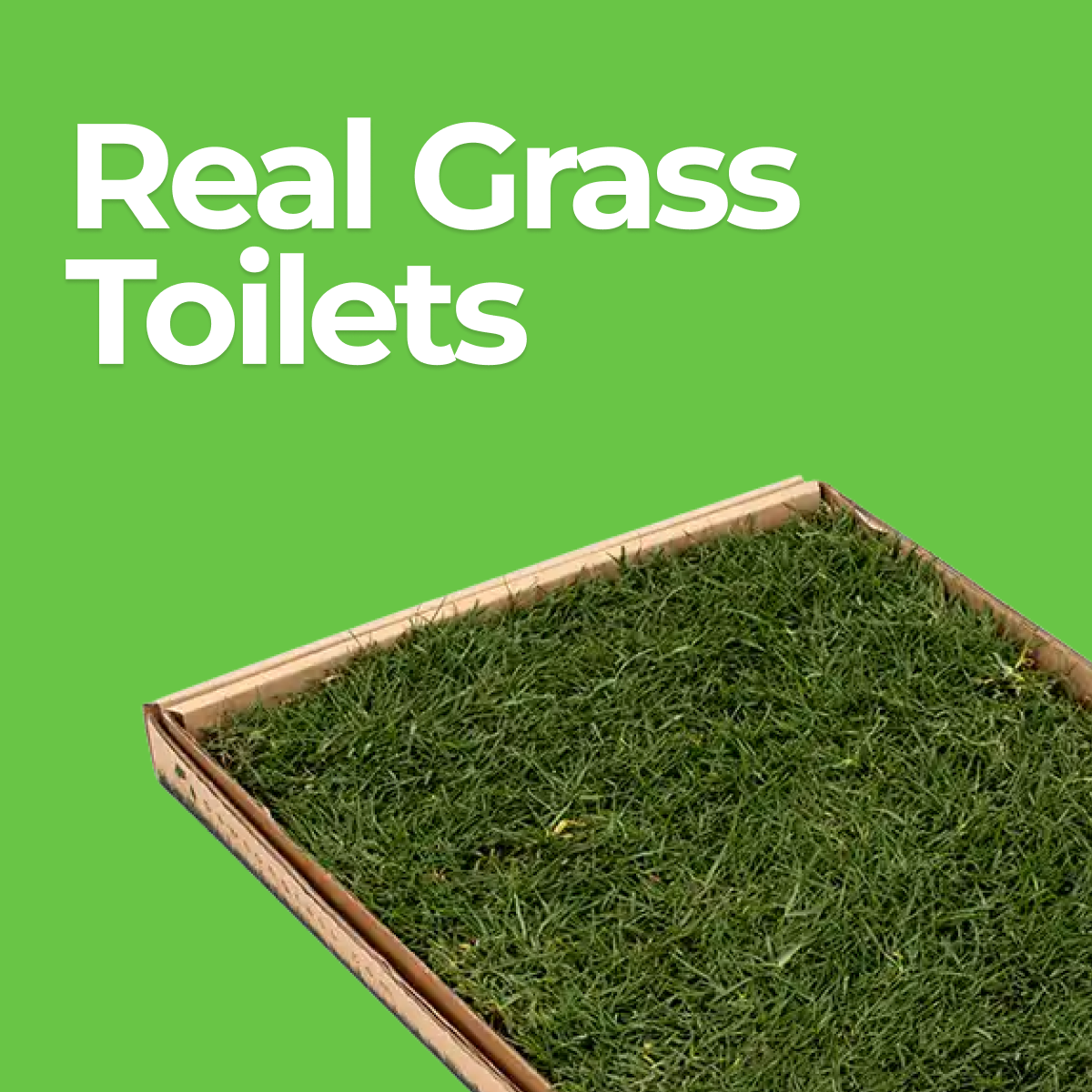
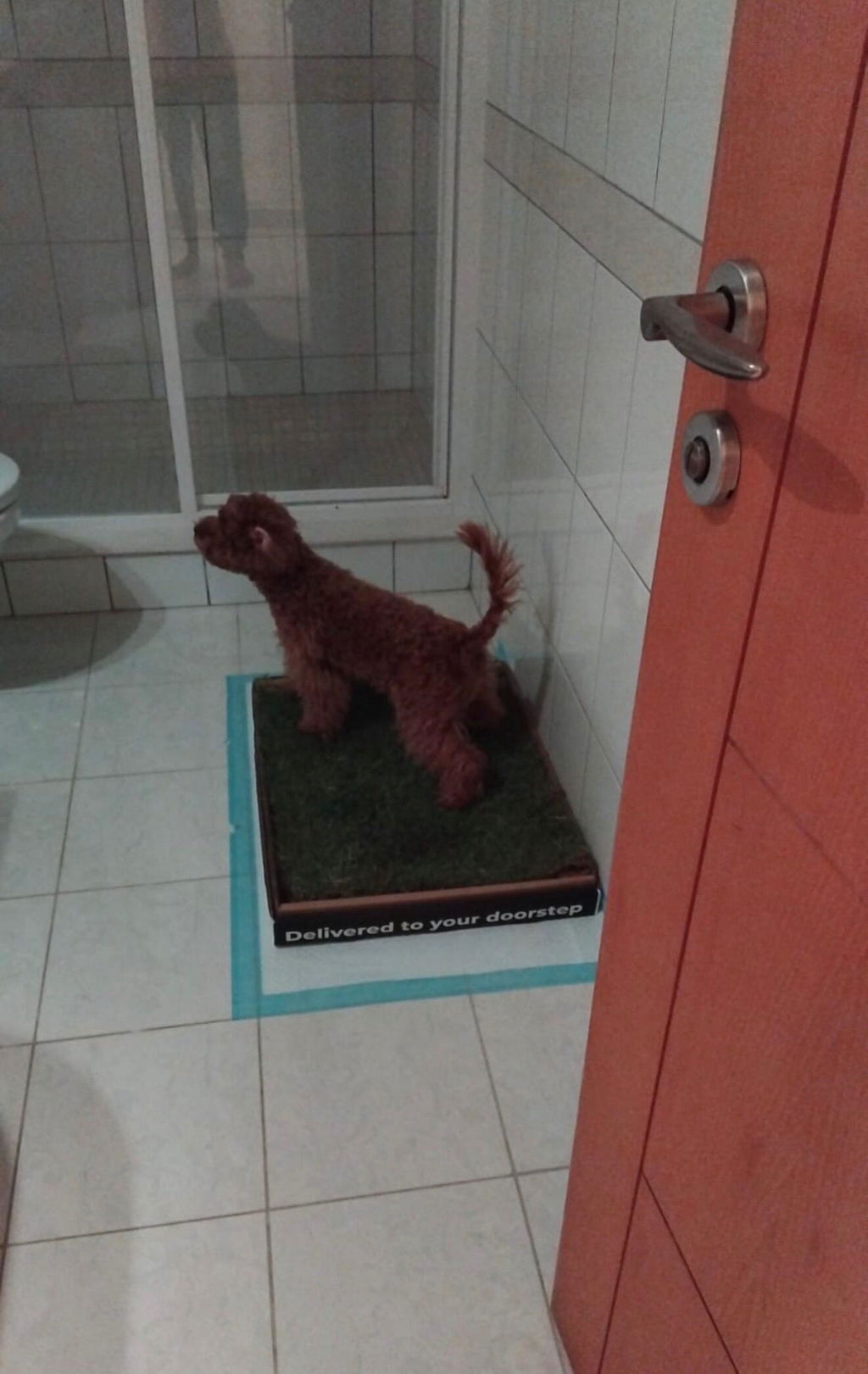
The schedule is the real tool. Take your puppy outside (or to their POG grass) every 2 hours during the day, after every nap, and after every meal. Use a consistent cue word at the toilet spot. When they go outside or on the grass, reward immediately with calm praise and a treat. Every successful outdoor toilet is a step toward the grass becoming the only option.
Migrating the pad. As your puppy's bladder control builds, move the pad gradually: back of kennel toward the gate, then just outside the kennel gate, then further across the room, then into the toilet area or onto the POG grass. By 16 weeks, most puppies have enough schedule and bladder control to work from the grass directly. The pad disappears. The grass system takes over.
This is the natural connection between the Indoor Dog Kennel and the Paws On Pause Grass System. The kennel handles sleep and early containment. POG handles where toileting happens for life. Set them both up together for a puppy who knows where to sleep and where to go from week one.
Welfare Notes
- Voluntary retreat, not extended confinement. Maximum 4 hours gate-closed during the day.
- Introduce gradually. Never place your dog inside the kennel: they enter on their own.
- Watch for stress signals: panting, drooling, pawing at the gate, vocalising. If you see them, open the gate immediately and slow your timeline.
- UAE summer: room air conditioning must be running whenever your dog is inside with the gate closed. Plywood retains heat.
- Never leave food or water inside with the gate closed.
- The Indoor Dog Kennel is not suitable for cats. The laser-cut pattern openings are not cat-safe.
- This guide supports behaviour training and voluntary rest. It is not a treatment for diagnosed separation anxiety or clinical anxiety conditions. Speak with a vet or certified animal behaviourist for those.