














The suitcases are unpacked, school supplies are appearing around the house, and your work calendar is filling up again.
Your dog, meanwhile, still thinks summer hours are permanent.
After weeks of extra company, later mornings and flexible days, returning to work can feel like a major change from your dog’s perspective. The 2026–2027 UAE school year begins on August 31, 2026, which means many households will become quieter and busier at roughly the same time.
The best time to prepare your dog is not on the first morning everyone leaves. Begin around two weeks earlier so the new routine arrives gradually.
This 14-day plan will not treat clinical separation anxiety. It is a practical reset for dogs that are comfortable being alone but have become used to more family time during the summer.
Days 14 to 11: Restore the Basic Daily Anchors
Start with the parts of the day your dog can predict:
- Wake-up time
- Breakfast
- Morning toilet break
- Rest time
- Evening meal
- Final toilet break
- Bedtime
Move these towards the times you will follow once work and school restart.
If your dog has been waking at 9:00 AM but the new morning begins at 6:30 AM, do not make the full change overnight. Shift the schedule earlier in small steps.
Try moving breakfast, walks and bedtime by 15 to 30 minutes every day or two.
Keep the sequence consistent even when exact times vary slightly:
Wake up → toilet opportunity → breakfast → movement → calm rest
POP’s 6 AM / 8 PM UAE summer dog routine can help you structure the day while August heat continues to limit longer daytime walks.
Days 10 to 8: Bring Back Quiet Time
Your dog does not need to be physically alone to practise independence.
Begin by creating short periods when everyone is home but unavailable. You might work in another room, prepare school items or sit at a desk while your dog rests in their normal space.
Give them:
- A comfortable bed
- Fresh water
- Safe enrichment
- A calm, cool indoor environment
- Access to their normal toilet area where appropriate

Avoid entertaining them every time they stand up, follow you or look bored. Notice and reward moments when they settle independently.
For more detailed guidance, POP’s guide to teaching your dog independence without guilt explains how calm independence develops through small, repeatable moments.
The aim is not to ignore your dog. It is to help them understand that a quiet house does not mean something is wrong.

Days 7 to 5: Practice Short Departures
Now begin leaving the home for very short periods.
Start with a duration your dog can already handle comfortably. That might be 30 seconds, two minutes or ten minutes.
Take your keys, leave normally and return calmly. If your dog remains relaxed, increase the time gradually over several sessions.
Time alone should be increased very gradually so the dog does not move from comfort to panic.
Do not turn every practice departure into a dramatic goodbye. Calm departures and returns make the event feel ordinary.
You can also practise departure cues without leaving. Put on your shoes, pick up your bag and then sit down again. This can reduce the idea that every key sound means hours of isolation are coming.
Days 4 and 3: Test the Real Morning
Run a complete rehearsal using the schedule you expect to follow.
Wake up at the planned time. Take your dog for their usual morning toilet break or walk. Serve breakfast when it will be served on working days. Get dressed, prepare your things and leave for a manageable period.
This rehearsal may reveal practical problems such as:
- Breakfast being served too close to departure
- No time for a post-meal toilet opportunity
- Your dog becoming excited by rushed mornings
- A toilet break that is too short
- Enrichment being prepared too late
- Family members using different cues
- The dog having no suitable midday plan
It is better to find these gaps during a test than during your first busy Monday.
A camera can show what happens after the door closes. Look for whether your dog settles, eats, sleeps, paces, barks continuously or remains fixed near the exit.
Day 2: Confirm the Midday Plan
Do not assume that changing the morning routine automatically makes a full workday manageable.
Consider your dog’s:
- Age
- Health
- normal toilet frequency
- Medication
- Water intake
- Mobility
- Previous experience of being alone
- Total time alone, including your commute

Your midday plan might include a dog walker, pet sitter, family member, daycare or a reliable home toilet area.
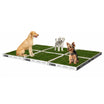
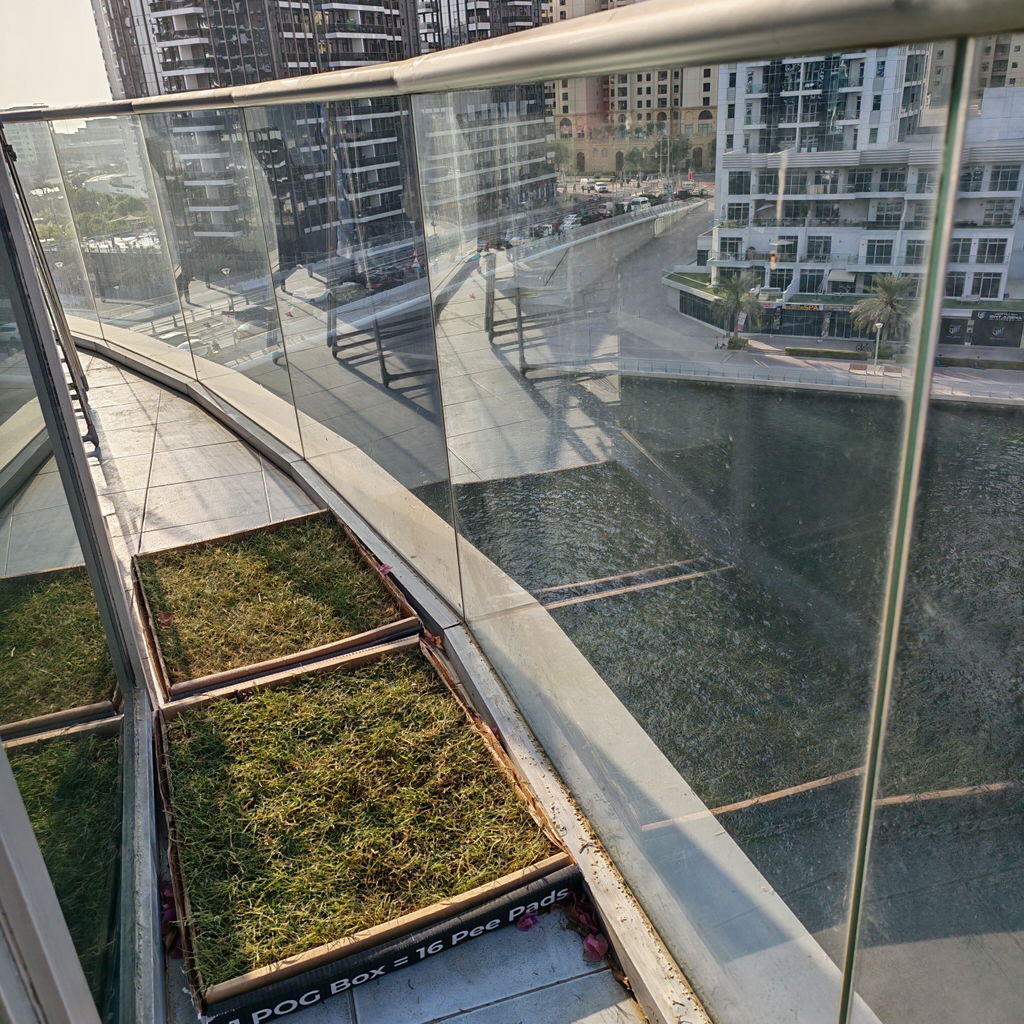
For apartment dogs, a POG real grass toilet can provide familiar toilet access when owners are working or when UAE daytime heat makes an outdoor trip impractical.
POG is not a replacement for exercise, walks or company. It is one practical part of a wider workday plan.
If your dog is new to real grass indoors or on the balcony, begin training before the first office day. POP’s POG training guide explains how to introduce the surface using a consistent location, cue and reward.
Day 1: Keep the Final Day Familiar
The day before the new routine begins is not the time for another major change.
Keep meals, walks and sleep predictable. Prepare enrichment, dog-walker instructions and anything you need for the morning in advance.
Check that:
- Water is easily accessible
- The resting space is comfortable
- The toilet plan is clear
- Doors and balconies are secure
- Unsafe items are out of reach
- Caregivers know the same commands
- Emergency contact information is available
Your goal is a calm, boring first morning. Boring is useful when a dog is learning that the new routine is safe.
The First Week Back: Observe Before You Adjust
Your dog may need a few days to settle into the new rhythm.
Small changes do not always mean the plan has failed. However, monitor for:
- Persistent barking or howling
- Pacing or heavy panting when not hot
- Drooling or shaking
- Refusing high-value food when alone
- Destruction around doors or windows
- Escape attempts
- Repeated indoor accidents
- Behaviour that becomes worse with each absence
If accidents begin, read why a fully trained dog may suddenly start toileting indoors before treating the problem as stubbornness.
If your dog becomes highly distressed during brief absences, do not continue increasing the time. Speak to your veterinarian or a qualified reward-based behaviour professional. A 14-day routine reset is preparation, not a substitute for an individual treatment plan.
The Takeaway
Your dog does not need to understand your work calendar.
They need the household’s changes to arrive in a way they can manage.
Start with familiar daily anchors. Reintroduce quiet time. Practise short departures. Test the real morning. Confirm toilet access and midday support before the first full day.
Fresh schedule. Same dog drama. Much less first-Monday chaos.



Leave a comment
This site is protected by hCaptcha and the hCaptcha Privacy Policy and Terms of Service apply.