







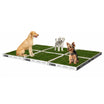





Yes. Dogs can be potty trained indoors and outdoors. A home grass toilet does not cancel an outdoor toilet habit, and going outside does not erase the home routine. The clearest method is to make one location reliable first, then add the second while keeping the cue and reward consistent.
Think of it as teaching your dog two correct addresses, not changing the rules of the whole house.
For UAE dog parents, that flexibility can be genuinely useful. A designated home toilet can cover urgent breaks, lift delays, late nights or mobility changes. Outdoor time still provides movement, sniffing, play, training and social experiences. One is bathroom access. The other is a much bigger part of your dog's day.
Yes, Dogs Can Be Potty Trained Indoors and Outdoors
Dogs learn through clear patterns. They can understand that one specific real-grass area at home and appropriate outdoor areas are both acceptable places to toilet.
That sequence matters. If the home spot, outdoor spot, cue, schedule and reward all change at once, your dog has several puzzles to solve. Make the first answer obvious, then add one new piece.
Will an Indoor Grass Toilet Confuse My Dog?
Not automatically. Two approved locations are not usually the confusing part. Unclear boundaries are.
A toilet that moves from room to room, several different potty surfaces, changing cue words or inconsistent reactions to accidents can make the rule harder to read. A fixed location and a distinct surface make the message much clearer: this place is allowed; the rest of the floor is not.
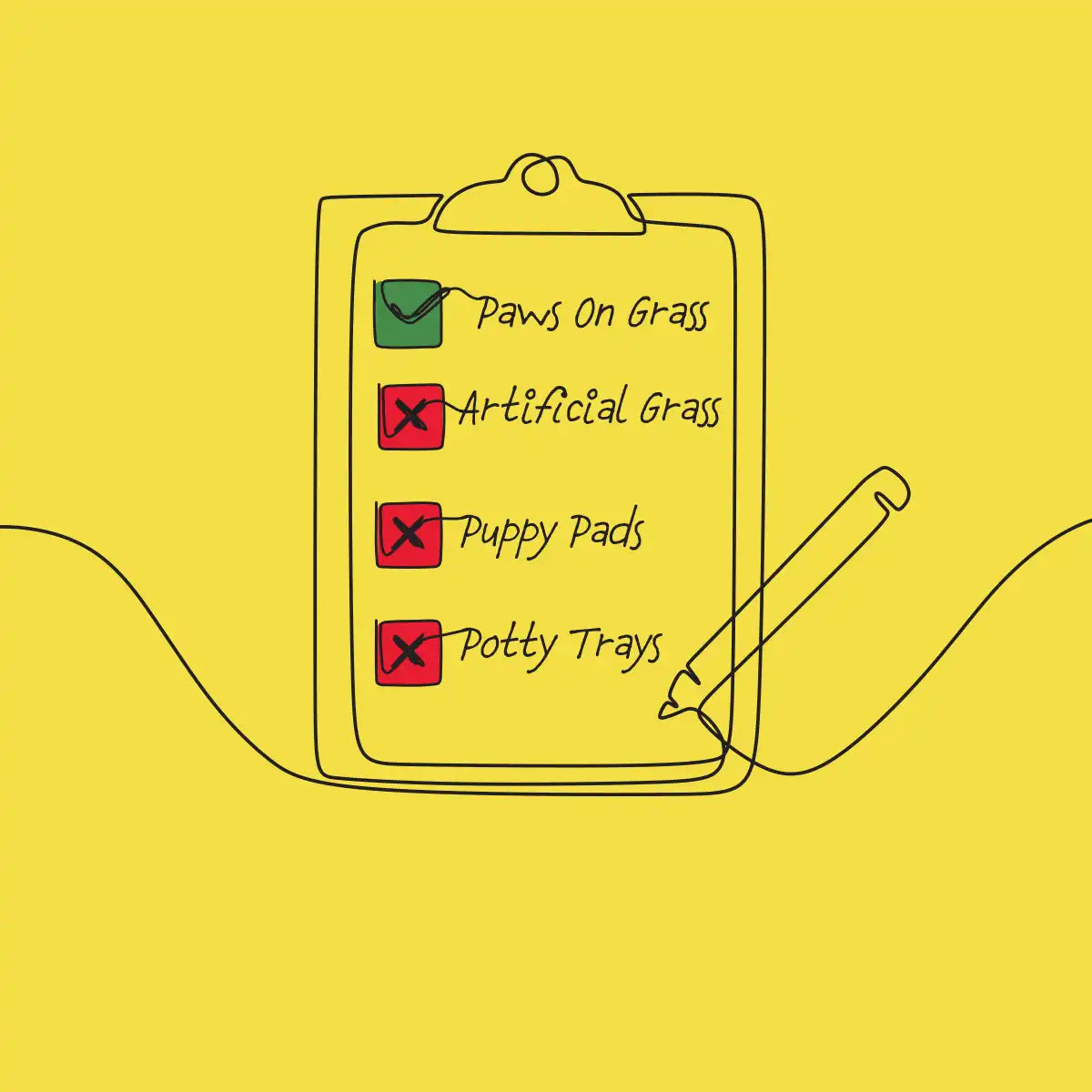
If you are still choosing a home surface, our real grass versus plastic pee pads guide covers that comparison separately.
Why Two Potty Locations Make Sense in UAE Homes
Apartment dogs do not always have a garden outside the door. A simple toilet break may involve a lead, keys, a lift, a lobby and a walk to the nearest suitable patch. A reliable home option gives the dog somewhere clear to go when a fast trip downstairs is not practical.
As October begins to open up more comfortable outdoor windows, the home routine does not need to disappear. You can bring back longer walks and more outdoor time while keeping the indoor or balcony toilet for the moments when it is useful.
The important distinction is simple: a home toilet can replace an extra bathroom-only dash. It does not replace walks, exercise, enrichment or time together.
How to Train Your Dog to Potty Indoors and Outdoors
1. Build One Reliable Toilet Habit First
Start with the location your dog already understands.
If your dog reliably uses a home grass toilet, keep that routine steady before adding structured outdoor practice. If your dog already toilets outside, protect that success while introducing the home option. If neither location is reliable yet, choose one and build the foundation there first.
You are ready to add the second place when you can guide your dog to the first at predictable toilet times and they understand what to do without a tour of the entire home or neighbourhood.
If you are starting from zero with a young dog, our Dubai apartment puppy potty-training guide covers the timing and supervision basics in more detail.
2. Keep the Home Toilet in One Clear Location
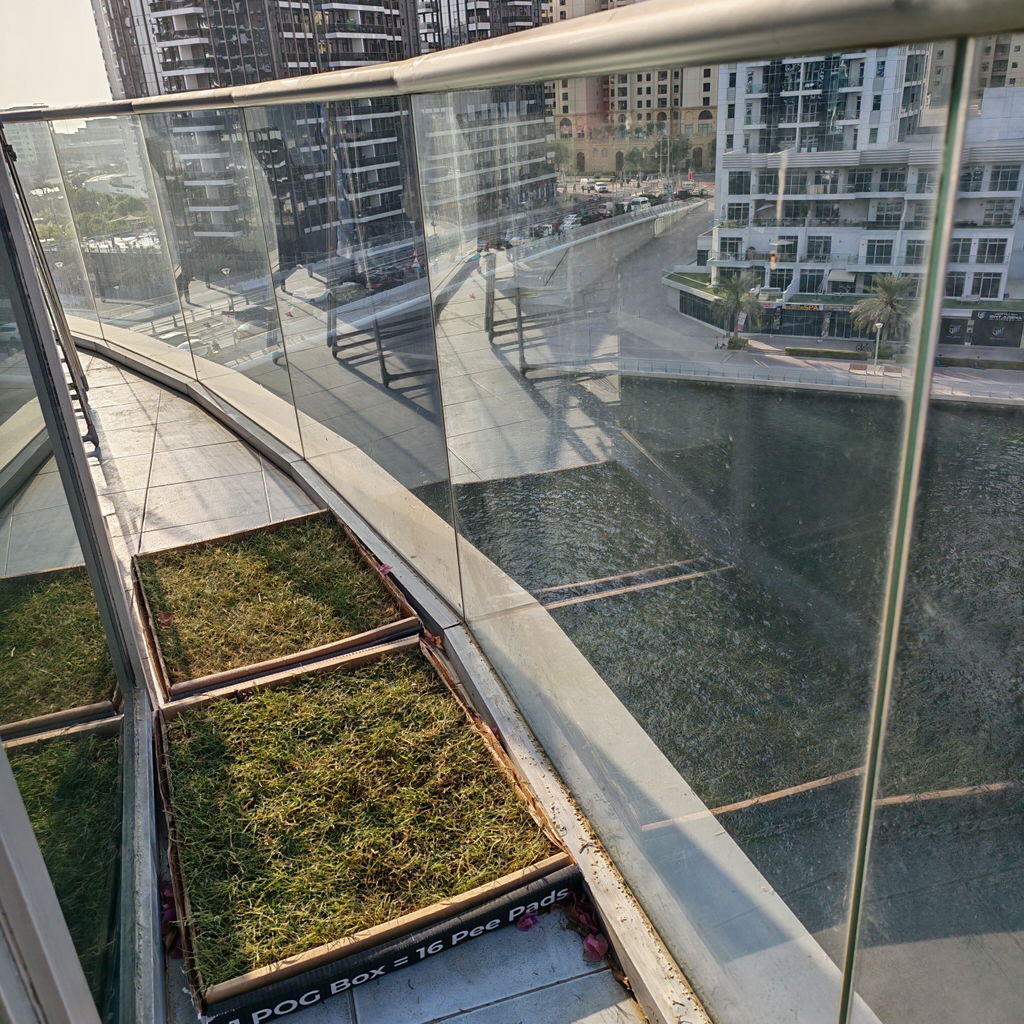
Choose a quiet, easy-to-reach place away from your dog's bed, food and water. A safe shaded balcony or a calm, well-ventilated indoor area can work, depending on your home and building rules.
Avoid moving the toilet around to suit the day. The more predictable its location, the easier it is for your dog to find the right answer quickly.
3. Use the Same Potty Cue in Both Places
Pick one short phrase, such as "go potty", and ask everyone in the household to use it.
At first, say the cue quietly as your dog begins to toilet. Do not repeat it through several minutes of sniffing. With repetition, the words begin to predict the behaviour. Use the same cue at the home toilet and at the outdoor spot so the request stays familiar even when the location changes.
4. Reward the Right Moment
Reward your dog as soon as they finish in the approved place. If the treat appears after the lift ride or once you are back in the kitchen, the connection is much less clear.
After an outdoor success, let the walk continue when you can. If toileting always makes the fun end, some dogs may learn to delay it.

5. Introduce the Second Location at an Easy Time
Do not test the new location during a frantic emergency. Choose a predictable toilet opportunity, such as after waking, after a meal or at your dog's usual break time.
For a dog who already uses a home grass toilet, walk to one calm outdoor area on a lead. Pause, give them time to settle, use the familiar cue as they begin, then reward immediately.
For a dog who already goes outside, guide them to the home grass toilet at a predictable time. Keep the lead loose, wait quietly and reward the moment they finish. If nothing happens, supervise and try again later. Do not make your dog hold on uncomfortably to force a result.
6. Keep Both Options in the Routine
Once your dog understands both locations, use them intentionally. A simple routine might include:
- a morning outdoor toilet break followed by a sniff walk
- a home grass toilet for an urgent daytime or late-night break
- an evening outdoor break with walking, play or training
This is a pattern, not a rigid timetable. Your dog's age, health, routine and individual toilet needs should decide the frequency.
What If My Dog Only Uses One Potty Spot?
My Dog Uses the Home Grass Toilet but Will Not Go Outside
Choose a quiet outdoor patch before beginning the exciting part of the walk. Stand calmly, give your dog enough time to sniff, and use the familiar cue only when they begin. Reward generously, then continue the walk so outdoor toileting does not predict an immediate trip home.
My Dog Goes Outside but Ignores the Home Toilet
Practise after a predictable trigger rather than at random. Guide your dog to the fixed home spot, wait for a few calm minutes and try again later if they are not ready. Keep access supervised during training so you can redirect early instead of discovering an accident afterwards.
Accidents Have Started Again
Treat a miss as information, not disobedience. Clean the area thoroughly with a pet-safe product, tighten supervision and make the next correct choice easier. Do not scold or punish.
If accidents repeatedly follow meals, the issue may be timing rather than confusion. Our guide to dog meal timing and predictable toilet breaks can help you map the pattern.
If a previously reliable dog suddenly begins having accidents, speak with your veterinarian before assuming it is only a training issue.
 Can Adult and Senior Dogs Learn Both?
Yes. Adult dogs can learn the same two-location pattern, although an established history or a change of surface may mean they need more repetition.
For a senior dog, accessibility matters as much as the cue. Keep the home toilet on an easy, non-slip route and avoid unnecessary steps or obstacles. A familiar surface, quiet location and patient reward can make the new option easier to understand.
Where POG Fits Into a Two-Location Routine
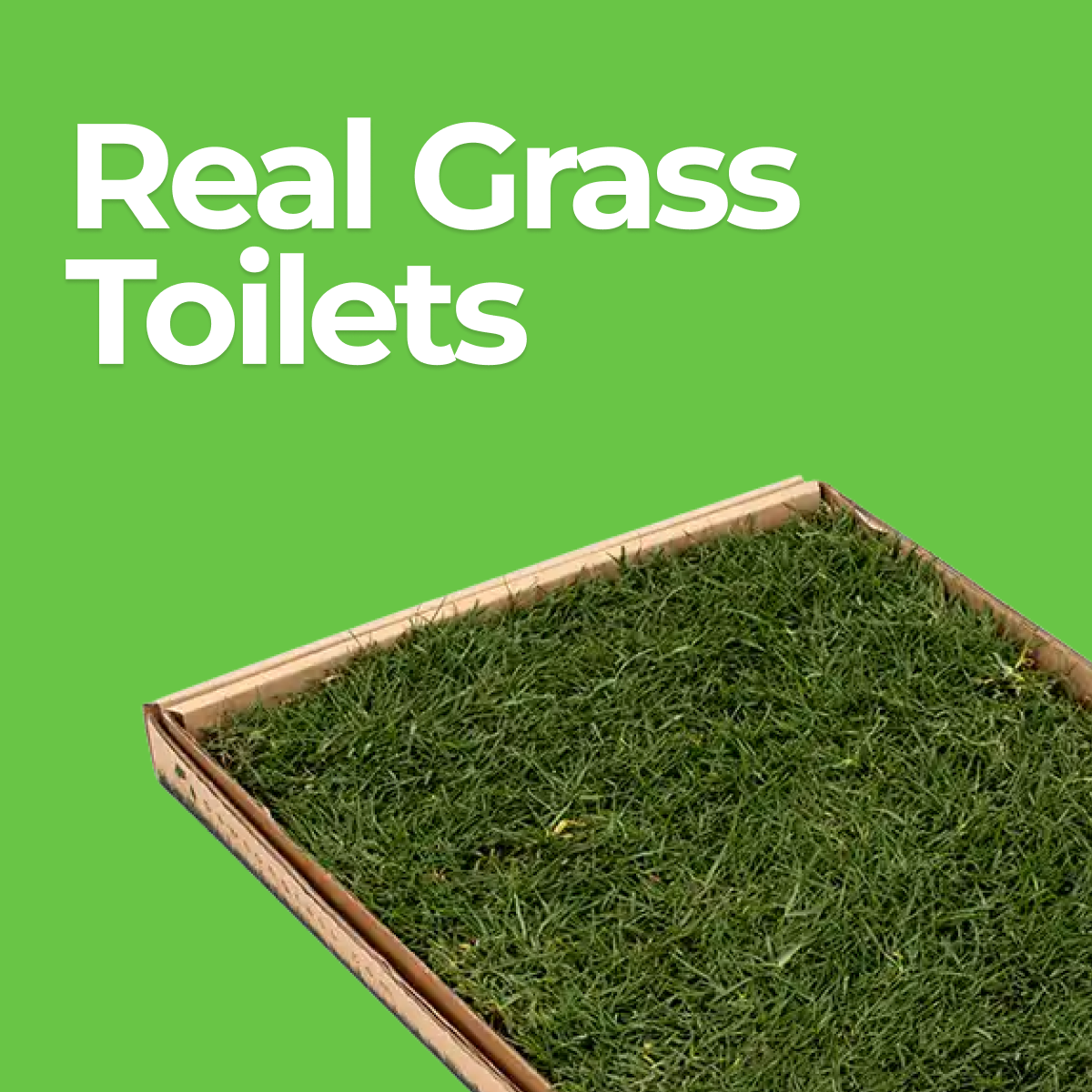
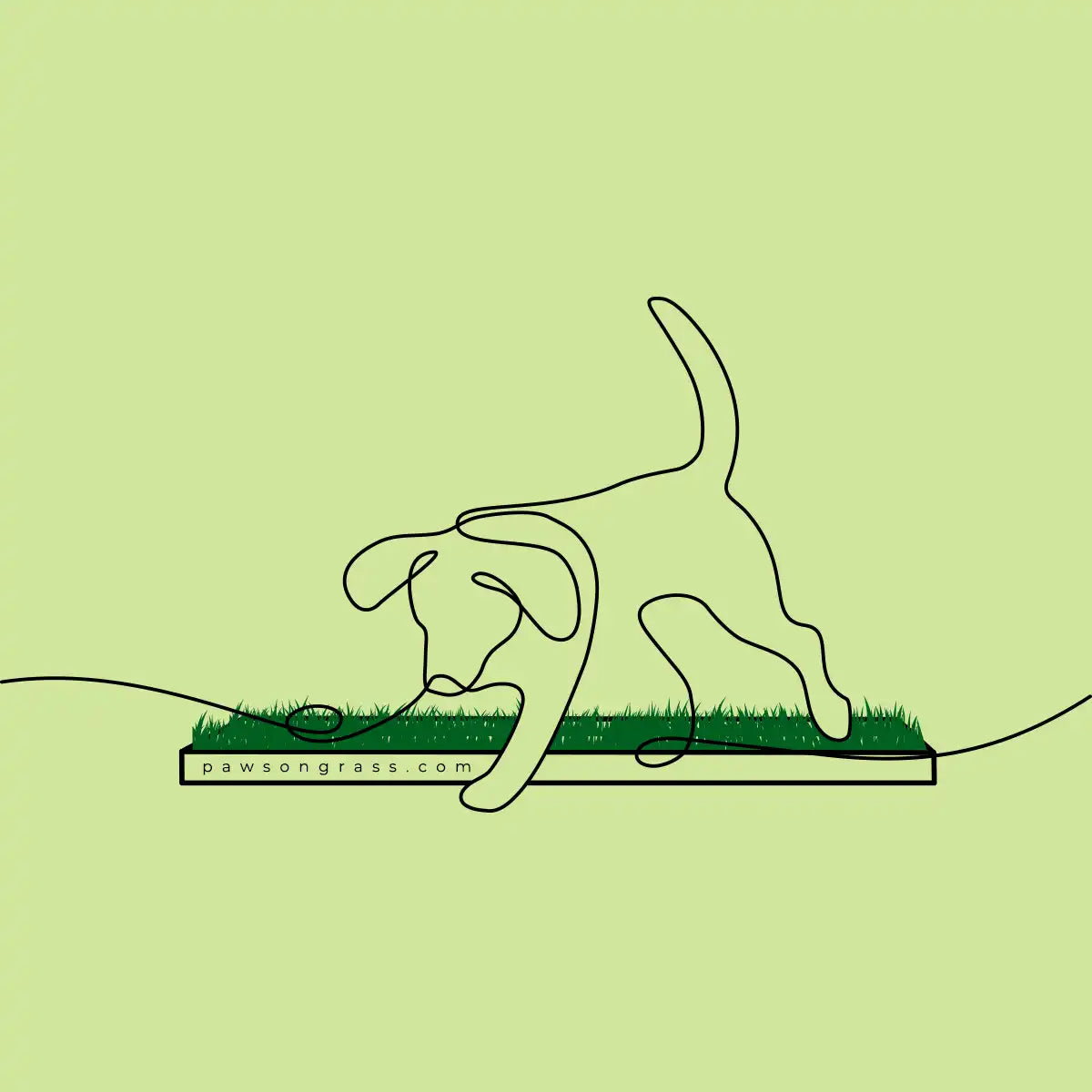
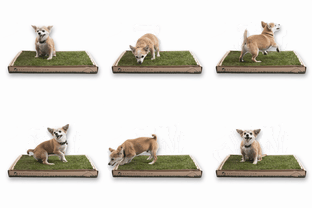
POG gives your dog one consistent real-grass toilet at home. It can stay in a chosen indoor area or on a safe shaded balcony, giving the home rule a clear location and surface.
A POG real grass dog toilet is the home bathroom. The walk is exercise, enrichment and time together. They are different parts of one routine, and your dog can have both.
For help with sizing, placement, care or first-time use, visit the POG Doggy Grass Toilet FAQs.
Frequently Asked Questions
Can Dogs Be Potty Trained Indoors and Outdoors?
Yes. Make one approved location reliable first, then add the second. Keep the home toilet fixed, use the same cue in both places and reward immediately after success.
Will a Grass Pad Confuse My Dog?
A grass pad does not automatically cause confusion. Problems are more likely when the potty location moves, the boundaries are unclear or the household uses inconsistent cues and rewards. Keep one distinct grass area and supervise while your dog learns.
Should I Use Different Potty Cues Indoors and Outdoors?
Usually, one cue is simpler. The location tells your dog where they are, while the shared cue tells them what behavior is being requested.
How Long Does It Take to Teach a Dog Two Potty Locations?
There is no honest universal timeline. A dog with one reliable habit may understand the second location quickly, while a puppy, rescue dog or dog changing surfaces may need more repetition. Track successful trips and accidents rather than comparing your dog with someone else's calendar.
Can an Older Dog Learn to Use an Indoor Grass Toilet?
Yes. Use a quiet, accessible location, a non-slip route, a familiar cue and immediate rewards. Speak with your veterinarian if the change is connected to pain, reduced mobility, increased urgency or new accidents.
Does an Indoor Grass Toilet Replace Dog Walks?
No. A home toilet provides bathroom access. Walks provide physical activity, mental stimulation, sniffing and shared time. Keep suitable outdoor activity in your dog's routine.
Keep the Home Base. Make the Routine Bigger.
Outside called. Your dog answered. A reliable home toilet can stay in the routine while walks become longer, richer and more frequent.
Explore POG real grass dog toilets delivered across the UAE and choose a size that gives your dog a clear, comfortable home potty spot.




Leave a comment
This site is protected by hCaptcha and the hCaptcha Privacy Policy and Terms of Service apply.